

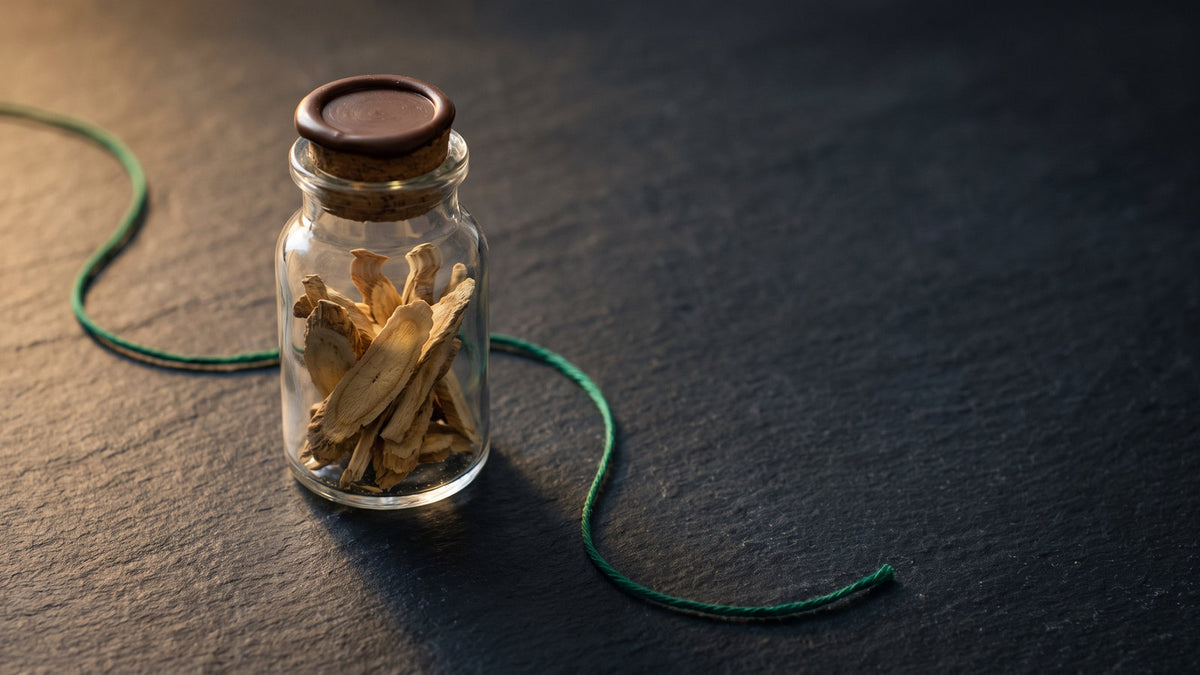
The safety signals around ashwagandha attach to concentrated root extracts taken daily, usually 300 to 600 mg, and in the liver case reports at doses up to 2,100 mg a day. NIH LiverTox records roughly two dozen published cases of liver injury attributed to ashwagandha, presenting 2 to 12 weeks after starting, and gives it a likelihood score of B, its category for a likely cause of clinically apparent liver injury.
The regulatory story starts with a 2020 assessment by DTU in Denmark, which concluded that on the available data no intake level for the root or its extracts could be set below which intake would be without risk of harmful effects. Denmark banned it in food supplements in 2023. Great Britain has not: the Food Standards Agency ran a call for evidence in 2024 and referred the question to the Committee on Toxicity, and the file is still open.
Ashwagandha is the most argued-over plant in the supplement aisle and the one with the thickest regulatory file. What follows is what official bodies have written down about it, with the body named in each case. It is not our reading of the plant. A food supplement brand is not allowed to publish one, and ours would be worth nothing if it were.
One set of numbers belongs at the top, because everything below is measured against it. The safety signals described here attach to concentrated root extracts taken daily, most often in the 300 to 600 mg range, and in the liver reports at doses well above that. An AllMaleUp tablet carries 10 mg of ashwagandha inside a 100 mg blend of six botanicals, at a maximum of one tablet in any 24-hour period. That is a difference of scale and nothing more. No authority has looked at our tablet, so we are not in a position to call it safe, any more than to call it dangerous.
Why are regulators looking at ashwagandha?
On 15 May 2020 the National Food Institute at the Technical University of Denmark, DTU, sent a memorandum to the dietary supplements group at the Danish Veterinary and Food Administration. The subject was the root of Withania somnifera. It is a technical document in Danish, and it is the piece of paper that turned this plant into a regulatory problem across Europe.
DTU set out several strands. It reported that the root holds two main groups of constituents thought relevant to its possible effects, steroidal lactones called withanolides and alkaloids, and that on the available data it could not name which substance accounts for the effects reported in people and animals. It reported animal work indicating an effect on hormone levels and reproduction, and on the thyroid, the immune system and an enzyme of the nervous system. It reported that the root has been used by women as an abortifacient, that no study has fixed a level below which such an effect would not occur, and that the World Health Organization advises against use in pregnancy and breastfeeding because the safety data are missing. Our readership is male. That item is here because it is a regulator's stated reason, not because it applies to the reader.
What the Danish assessment concluded
The conclusion is one sentence long, and it is the sentence that did the damage. DTU wrote that on the available data no limit can be set for intake of the root, or of extracts of the root, below which intake would be without risk of harmful effects. That is not a finding that ashwagandha is harmful. It is a finding that the evidence does not let a safe level be drawn. The second is the more awkward result, because a regulator who cannot draw a line has nothing to permit.
Denmark then acted. The US National Institutes of Health Office of Dietary Supplements records that the 2020 Danish assessment discussed a potential abortifacient effect and potential effects on thyroid and sex hormones, and that Denmark subsequently banned the use of ashwagandha in 2023. The same NIH page records that France's food safety agency, ANSES, issued a statement in 2024 recommending against use in certain groups, among them pregnant and breastfeeding women and people with endocrine disorders.
The Danish report is contested. NIH notes that one source used for the abortifacient question was a monograph published in 2000 by the American Herbal Pharmacopoeia, and that the AHP has since stated its report was misrepresented and that there is no evidence the root causes abortions. Indian and industry researchers have criticised the assessment for leaning on animal work and for never being peer-reviewed. We cannot settle that argument, only note that it is live.
Can ashwagandha cause liver damage?
LiverTox is a database run by the US National Institute of Diabetes and Digestive and Kidney Diseases, part of the NIH. It records liver injury linked to drugs and herbal products and grades how confident each record is.
The entry describes roughly two dozen published cases of clinically apparent liver injury attributed to ashwagandha, first reported in 2017 and accumulating since. It records that the injury presented 2 to 12 weeks after starting the product, usually with a cholestatic or mixed pattern, jaundice and itching. It records that recovery generally followed 1 to 4 months after stopping, and that rare instances of fatal liver injury, or of the need for emergency liver transplantation, have been reported. It assigns a likelihood score of B, its category for a likely cause of clinically apparent liver injury. It states that the ingredient responsible is not known, and that withanolides are suspected.
The doses involved in the liver case reports
The doses in those reports are worth reading slowly. LiverTox describes commercial preparations supplying 150 to 600 mg in a capsule or tablet, taken one to three times daily, and one case at 2,100 mg a day. The NIH Office of Dietary Supplements describes five cases, in three men and two women aged 21 to 62 from Iceland and the United States, who had taken supplements containing 450 to 1,350 mg of ashwagandha daily for periods running from one week to four months. Those same five cases appear inside the Danish assessment, where the causality of one was rated definite, two highly likely and two probable.
A caution belongs with those figures. NIH records that the contents of the products taken were not independently verified in every case, and that some were combination products holding ashwagandha alongside other ingredients. Case reports establish association and sequence. They do not establish that one plant caused an outcome in a person taking several things at once. That is why regulators treat a case series as a signal to investigate rather than as a verdict.
Who should not take ashwagandha?
The US National Center for Complementary and Integrative Health, NCCIH, publishes the plainest. Its page states that ashwagandha may be safe when taken in the short term, up to three months, and that not enough is known about its long-term safety. It lists drowsiness, upset stomach, diarrhoea and vomiting among reported side effects. It states that although it is rare, there have been a number of cases that link liver injury to ashwagandha supplements. It advises against use by people who are pregnant or breastfeeding, by anyone due to have surgery, by people with autoimmune or thyroid disorders, and by men with hormone-sensitive prostate cancer.
The NIH Office of Dietary Supplements gives the same short-term picture and adds the medicines. It names potential interactions with thyroid hormone medicines, antidiabetes medicines, antihypertensives, immunosuppressants and sedatives. That list is why the standard advice for anyone on a prescription is to ask first.
Thyroid, prescribed medicines and surgery
The thyroid entries are the most specific. NIH records a study in which three adult men taking 500 mg a day of a standardised root and leaf extract for eight weeks showed small changes in blood thyroxine, and a trial in 50 people with subclinical hypothyroidism where 300 mg twice daily for eight weeks shifted thyroid-stimulating hormone, T3 and T4 levels against placebo. It records three case reports of thyrotoxicosis in women aged 32 to 73 taking ashwagandha extract, with the symptoms resolving in all three after they stopped. Those are the grounds for the interaction warning, and they sit, again, at 300 mg and above.
The surgery item is the one people skip. A plant with possible effects on blood sugar, blood pressure and sedation is one an anaesthetist would want told about, so the advice is to stop before a planned operation.
Is ashwagandha banned in the UK?
Great Britain has not banned it, and the reason is procedural rather than a verdict on the plant. Herbal supplements here are regulated as food rather than licensed as medicines, so no one approves a product before sale and no one withdraws an ingredient without a risk assessment behind the decision. Denmark ran that assessment and reached a conclusion. Great Britain is still running one.
The Food Standards Agency opened a call for evidence on ashwagandha that ran from 8 July 2024 to 1 September 2024. Nineteen responses came in, eight of them from food businesses and seven from industry representatives. The FSA states that the responses submitted will be thoroughly reviewed by the FSA and provided to the Committee on Toxicity, and that the risk assessment and the evidence package built alongside it are then to be reviewed on a four-country basis to inform future risk management advice. In plain terms: the file is open, the committee has it, and ministers get the options at the end.
This is also where two separate rules get collapsed into one. Not being allowed to say what a plant does is a claims rule. Not being allowed to sell it is a composition rule. They live in different instruments. None of the six botanicals in our tablet holds an authorised health claim in Great Britain; their claims sit on hold under retained Regulation (EC) 1924/2006, which is a queue rather than a rejection. Legality of sale is settled elsewhere. A brand saying nothing about what a plant does is obeying the first rule, and that tells you nothing about the second.
How to report a suspected side effect in the UK
There is a route for reporting a suspected reaction, and it is worth knowing before you need it. The Yellow Card scheme is run by the Medicines and Healthcare products Regulatory Agency. Its guidance covers suspected adverse drug reactions to all medicines, including herbal medicines and homeopathic remedies, and the MHRA says it is particularly interested in reports involving complementary remedies such as homeopathic and herbal products. Reports go in through the Yellow Card website or app, anyone can file one, and proof is not the threshold. Suspicion is. The boundary to hold in mind is that a food supplement is legally food and not a medicine, so the practical first move is a pharmacist or GP, who can make the report.
Two things here are ours to say, and both are checkable. The first is what is in the tablet: ashwagandha, Withania somnifera, at 10 mg, alongside Ginseng 25 mg, Maca 25 mg, Tribulus 20 mg, Guarana 10 mg and Catuaba 10 mg, adding to 100 mg, pressed in the UK on a GMP-registered line, at a maximum of one tablet in any 24-hour period. The batch code and the best-before date are on the blister foil. Quote the code to hello@maleup.co.uk and the certificate of analysis for that run comes back, which is the only document that says what is in the tablets you bought.
The second is a naming point that saves confusion when you hold two packs. Ashwagandha and ginseng are unrelated plants, despite the trade habit of calling Withania somnifera 'Indian ginseng'.
The practical instruction is short. This product is not for under-18s. If you take prescription medicines, including anything for the thyroid, blood pressure, blood sugar or the immune system, or you have a diagnosed condition, or an operation booked, speak to a pharmacist or your GP before taking any botanical supplement, and take the pack so they can read the back of it. If you have taken something and feel unwell, stop, and tell them that too.
- DTU (Denmark, May 2020) concluded that no safe intake level for the root or its extracts could be set from the available data.
- NIH LiverTox lists about two dozen published liver injury cases, onset 2 to 12 weeks, usually cholestatic or mixed, with rare fatal or transplant outcomes.
- NCCIH advises against use in pregnancy or breastfeeding, before surgery, and by people with autoimmune or thyroid disorders.
- NIH names potential interactions with thyroid, antidiabetes, blood-pressure, immunosuppressant and sedative medicines.
- The FSA call for evidence ran 8 July to 1 September 2024 and went to the Committee on Toxicity; ashwagandha remains legal to sell in Great Britain.
Common questions
What are the side effects of ashwagandha?
NCCIH lists drowsiness, upset stomach, diarrhoea and vomiting among reported side effects, and states that ashwagandha may be safe when taken in the short term, up to three months, with not enough known about long-term safety. NCCIH also states that although it is rare, there have been a number of cases that link liver injury to ashwagandha supplements. These reports concern concentrated extracts taken daily, most often at 300 to 600 mg.
Can ashwagandha cause liver damage?
NIH LiverTox records roughly two dozen published cases of clinically apparent liver injury attributed to ashwagandha since 2017, presenting 2 to 12 weeks after starting the product, usually with a cholestatic or mixed pattern, jaundice and itching. It records recovery 1 to 4 months after stopping, with rare instances of fatal injury or emergency transplantation, and assigns a likelihood score of B, its category for a likely cause. It states the responsible ingredient is not known and that withanolides are suspected.
Who should not take ashwagandha?
NCCIH advises against use by people who are pregnant or breastfeeding, by anyone due to have surgery, by people with autoimmune or thyroid disorders, and by men with hormone-sensitive prostate cancer. The NIH Office of Dietary Supplements names potential interactions with thyroid hormone medicines, antidiabetes medicines, antihypertensives, immunosuppressants and sedatives. Anyone on a prescription should speak to a pharmacist or GP before taking any botanical supplement.
Why did Denmark ban ashwagandha?
In May 2020 the National Food Institute at the Technical University of Denmark assessed the root of Withania somnifera for the Danish Veterinary and Food Administration. It concluded that on the available data no limit could be set for intake of the root or its extracts below which intake would be without risk of harmful effects. NIH records that Denmark subsequently banned the use of ashwagandha in 2023.
Is ashwagandha legal in the UK?
Yes. Great Britain has not prohibited it. The Food Standards Agency ran a call for evidence on ashwagandha from 8 July to 1 September 2024, received nineteen responses, and states that these will be reviewed and provided to the Committee on Toxicity, with the resulting risk assessment reviewed on a four-country basis to inform future risk management advice. Separately, no botanical in a UK food supplement may carry a health claim unless it is on the Great Britain register.
How do I report a suspected side effect from a supplement in the UK?
The MHRA runs the Yellow Card scheme, which covers suspected adverse drug reactions to all medicines, including herbal medicines and homeopathic remedies, and states it is particularly interested in reports involving complementary remedies. Anyone can file a report through the Yellow Card website or app, and suspicion rather than proof is the threshold. A food supplement is legally food rather than a medicine, so the practical first step is a pharmacist or GP, who can make the report.
- Ashwagandha — LiverTox: Clinical and Research Information on Drug-Induced Liver Injury — US National Institute of Diabetes and Digestive and Kidney Diseases (NIH) Likelihood score B; onset 2-12 weeks; rare fatal or transplant outcomes.
- Ashwagandha: Is it helpful for stress, anxiety, or sleep? — Health Professional Fact Sheet — NIH Office of Dietary Supplements Safety section: five liver cases at 450-1,350 mg/day; thyroid case reports; Denmark 2023; ANSES 2024.
- Ashwagandha: Usefulness and Safety — National Center for Complementary and Integrative Health (NIH)
- Risikovurdering af roden fra Withania somnifera, 15 May 2020 — DTU Fodevareinstituttet for Fodevarestyrelsen, Denmark In Danish. Concludes no intake limit without risk of harmful effects can be set.
- Summary of responses to call for evidence on ashwagandha — Food Standards Agency Ran 8 July to 1 September 2024; 19 responses; passed to the Committee on Toxicity.
- The Yellow Card scheme: guidance for healthcare professionals, patients and the public — Medicines and Healthcare products Regulatory Agency
Six botanicals, 100 mg per tablet, every weight printed on the carton: Ginseng 25 mg, Maca 25 mg, Tribulus 20 mg, Guarana 10 mg, Ashwagandha 10 mg, Catuaba 10 mg. Maximum one tablet in any 24-hour period. Pressed in the UK on a GMP-registered line.
See the packs →† Describes the traditional use of these botanicals (UK 'on-hold' botanical claims under retained Regulation (EC) 1924/2006). Not authorised EFSA health claims. AllMaleUp is a food supplement, not a medicine.